

Translated calls
A live interpreter, built into the line.
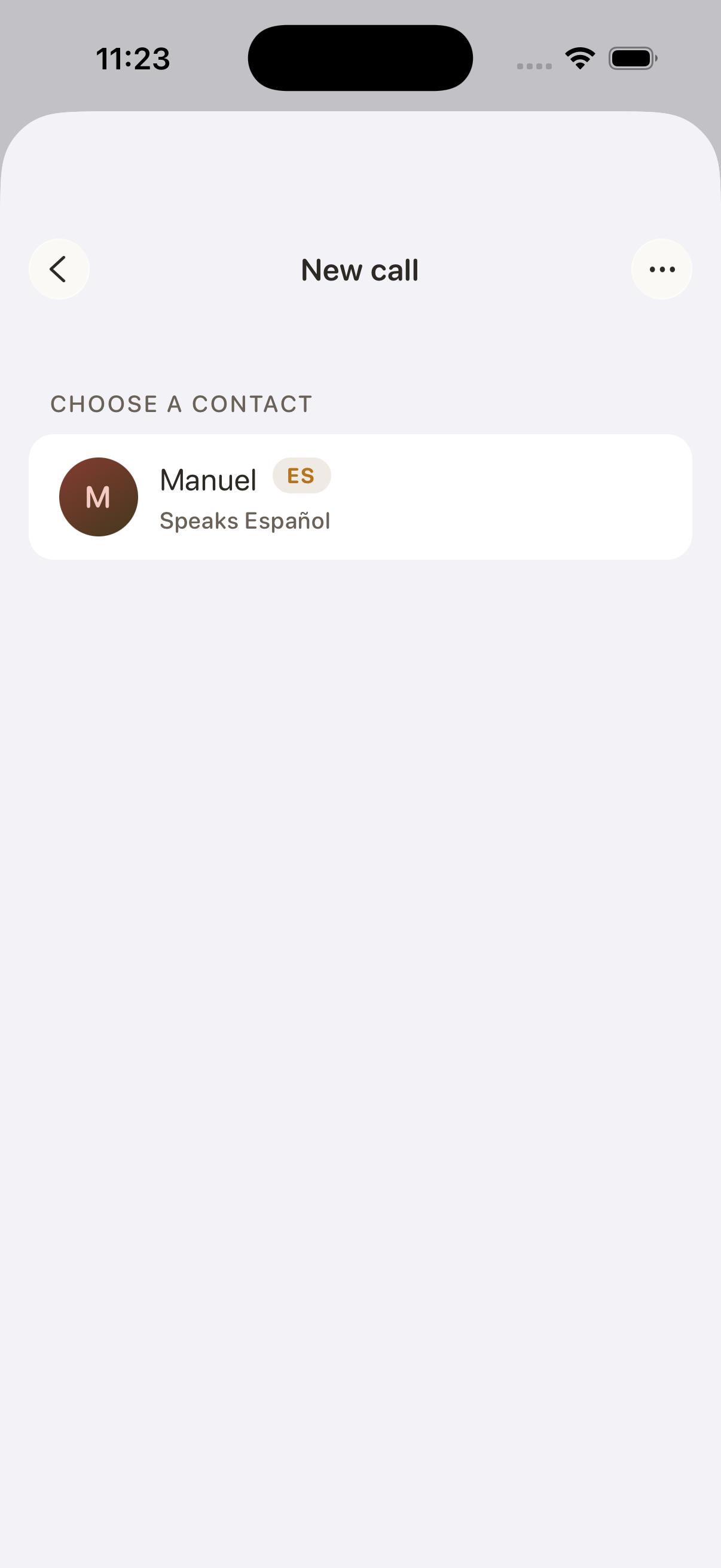
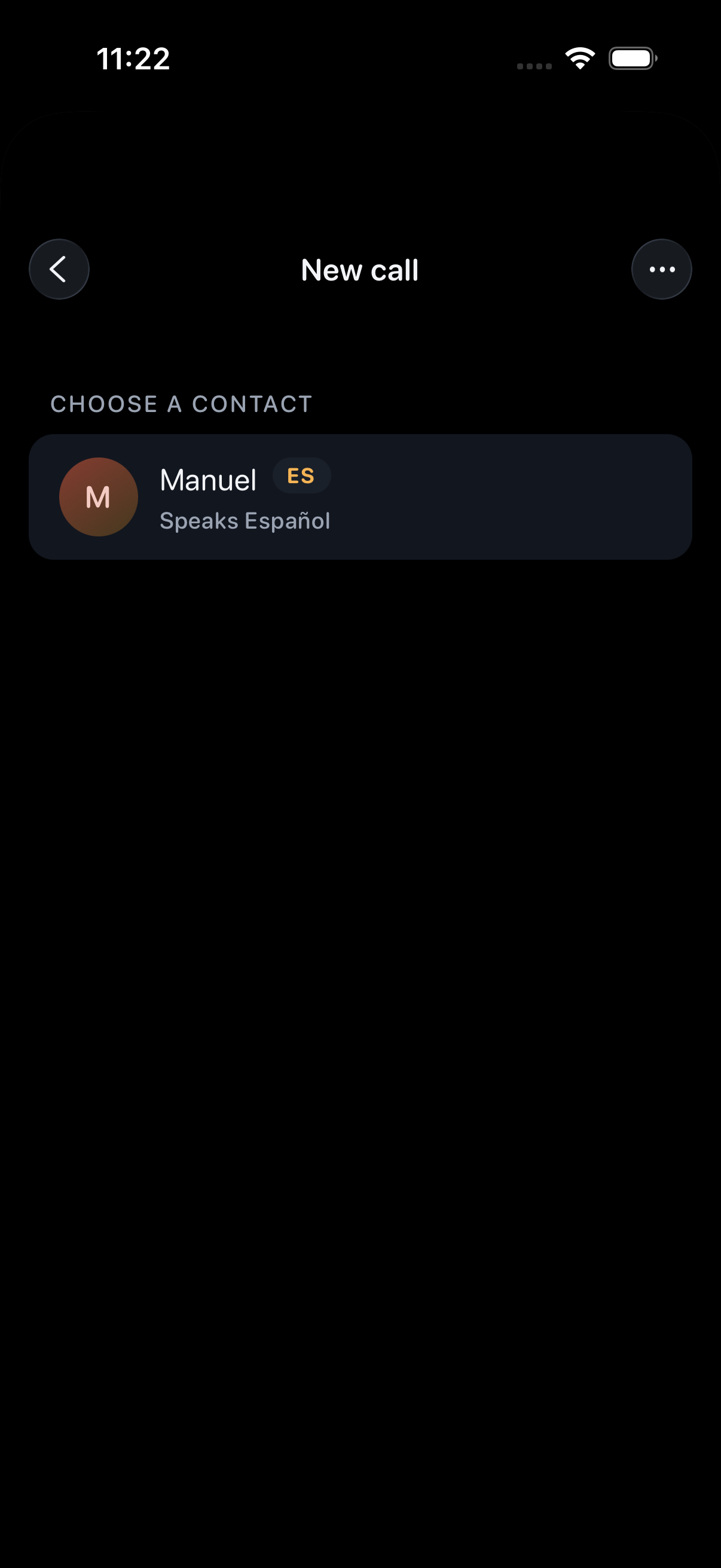
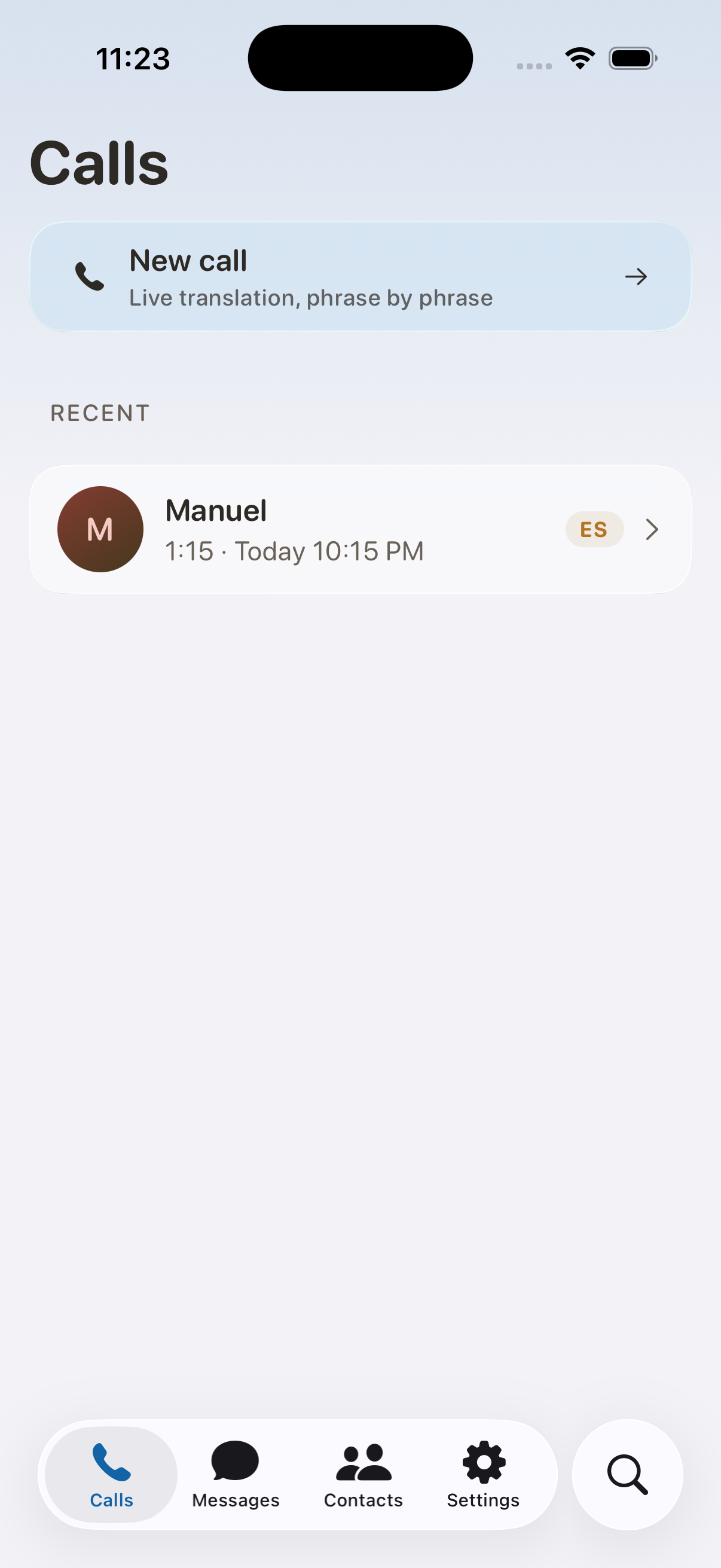
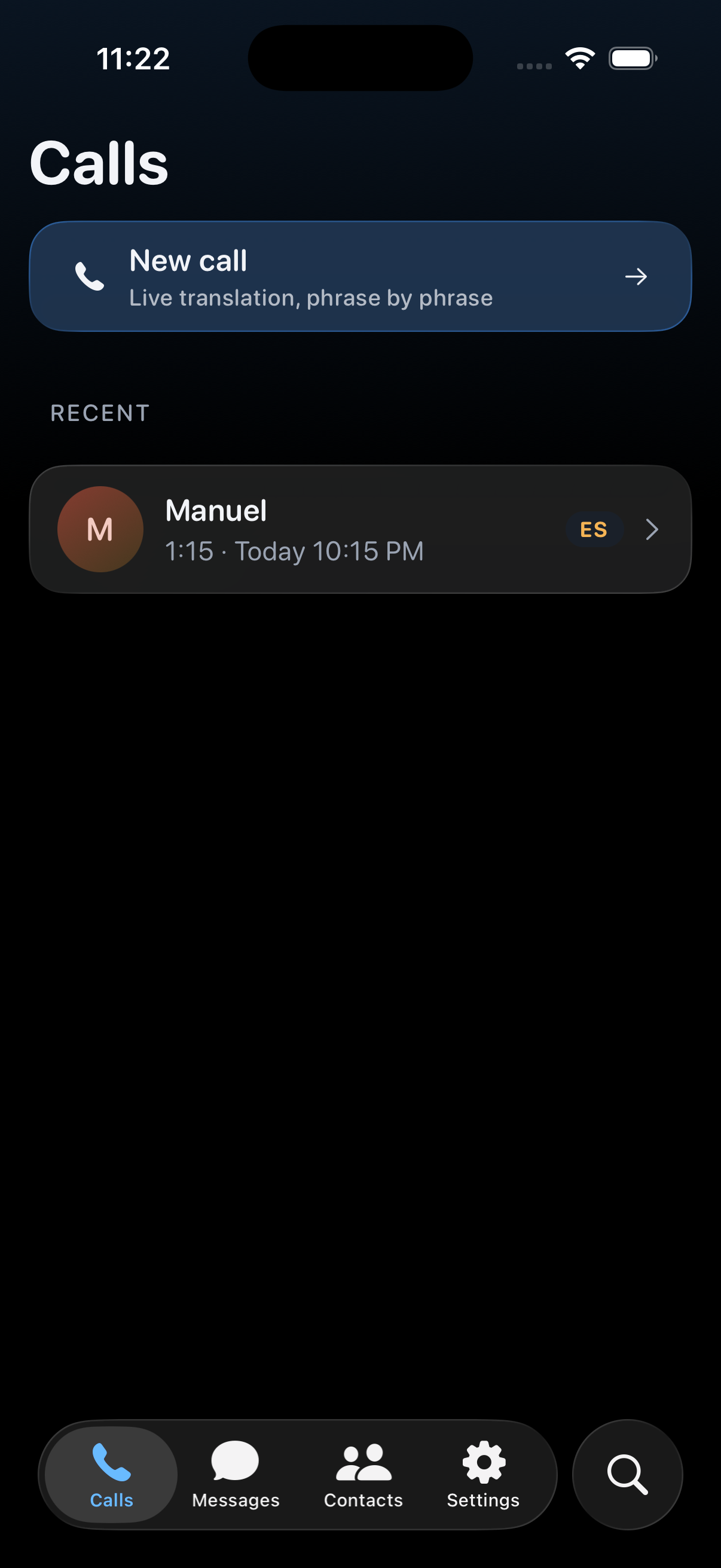
You speak normally. They hear their language about a second behind you — not after you stop talking, not through a walkie-talkie. One call, two languages, no app-swapping.
Phrase by phrase
Fast enough to talk over each other.
LingoDial chunks your speech at natural clause boundaries and starts translating each piece while you keep talking. That overlap is what turns two languages into one conversation — the other person can react, jump in, or finish your thought instead of waiting out a translated monologue.
First translated audio lands around 1.3 seconds in — versus five or more for apps that batch the whole utterance.
How it works
Translation that doesn't wait for you to stop talking.
Most translation apps batch whole utterances: you talk, then everyone waits. LingoDial runs recognition, translation, and speech synthesis as one overlapped stream of phrase-level chunks.
t = 0 ms
01 Listen
Your audio streams to speech recognition the moment you start talking. Partial transcripts land roughly every 250 ms — the pipeline never waits for you to finish.
t ≈ 250 ms
02 Chunk
A clause-boundary detector finalizes phrase-level chunks mid-sentence. Translation starts on your first phrase, not your last.
t ≈ 600 ms
03 Translate
Each finalized phrase is translated in stream order. If later context changes the meaning, the earlier line is corrected in place — rarely, and visibly.
t ≈ 1–2 s
04 Speak
Text-to-speech renders the translation in your verified voice. The other side starts hearing you one to two seconds after you begin — while you're still mid-sentence.
One sentence, on the wire
phrase streaming · not utterance batching
Because every stage overlaps, translated audio begins while the speaker is still mid-sentence. An utterance-batching app doing the same sentence would start speaking around the five-second mark.
Emotion & prosody
Emotion survives the translation.
Most translation flattens a voice into a polite monotone — the sound of customer service. LingoDial carries the real thing across: the warmth, the excitement, the laugh a half-second before the words. The cloned voice doesn't just say what you said. It sounds like you saying it.
Generic translation
Flat, evenly clipped. The feeling gets left in the other language.
LingoDial
warmlylaughsPace, warmth, and the laugh come through — in their language, still unmistakably you.
EN“I'm so glad you called, mijo — [laughs]”
ES“Qué alegría que llamaste, mijo — [ríe]”
Call someone you could never quite talk to.
The interpreter lives in the line — no third party, no lag. iOS first, English ⇄ Spanish. Join the waitlist for early access.